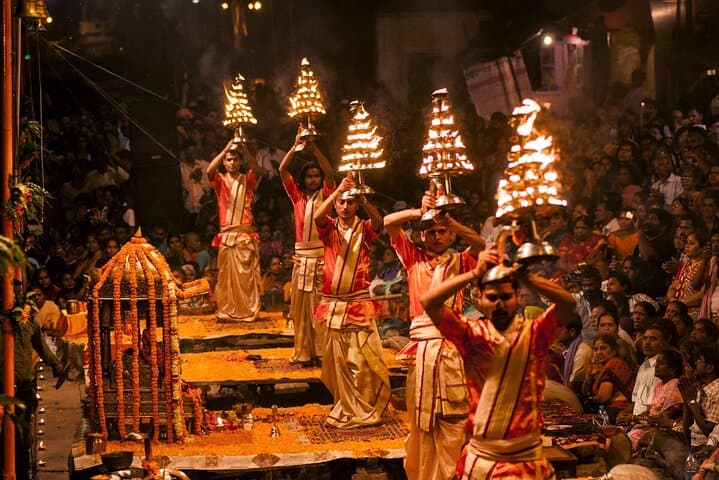
Experience the sublime twilight Ganga Aarti along the ancient stone ghats of Varanasi before stepping into hidden weaver ateliers where generations of master craftspeople preserve the golden legacy of Banarasi silk.
Introduction: The Living Pulse of Kashi
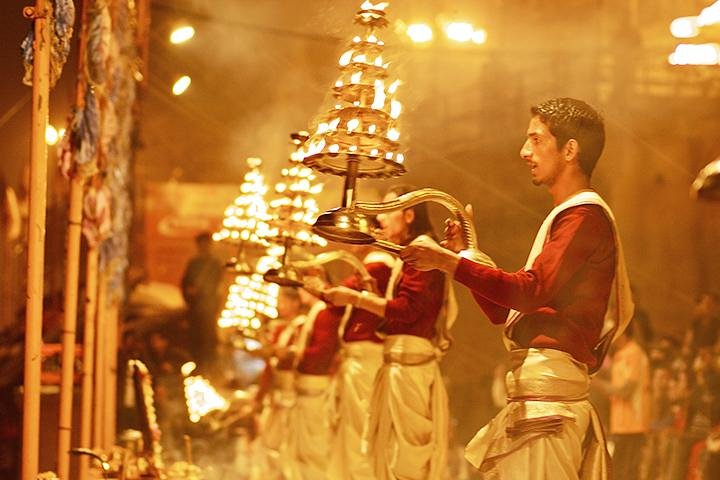
At dusk along the crescent arc of the River Ganges, Kashi—the ancient city older than tradition itself—transitions from the muted ochres of afternoon heat to the deep indigo of twilight. On the steps of Dashashwamedh Ghat, young priests clad in immaculate saffron silk step onto elevated wooden pedestals. As heavy brass censers emit swirling plumes of frankincense and camphor, the sonorous blast of conch shells reverberates across the water. This daily cosmic offering, the Ganga Aarti, is an ancient ritual of gratitude to the sacred river deity that has sustained North India's spiritual heartland for millennia.
Just a short walk inland through the labyrinthine alleys (galiyan) of Madanpura, another timeless ritual unfolds in near-whispering rhythms: the cadence of hand-operated pit looms where master artisans interweave fine Mulberry silk with silver and pure gold threads (zari) to craft the storied Banarasi saree. In Varanasi, the spiritual and the material do not exist in separate realms; they are woven into the same sacred fabric on the banks of Mother Ganga.
Historical Lineage & Architecture of the Waterfront
Varanasi, geographically known as Kashi ("The Luminous City"), occupies a singular topographical location. Here, the Ganges pauses its southward journey and sweeps northward toward its Himalayan source—a physical phenomenon considered auspicious in Vedic cosmology, symbolizing the human soul turning inward toward enlightenment.
The Maratha Renaissance and Stone Ghats: Although Varanasi's origins date back over three millennia, much of its present monumental riverfront architecture was sculpted during the 18th century. Following periods of destruction, Hindu rulers—most notably the Maratha queen Maharani Ahilyabai Holkar of Indore—led a grand architectural revival. In 1780, Holkar commissioned the reconstruction of the Kashi Vishwanath Temple and reinforced the stone steps of key river crossings using heavy Chunar sandstone, an enduring material capable of resisting severe monsoon floods.
The iconic eighty-four ghats form a continuous two-mile stone amphitheater. High retaining walls support palatial havelis, fortress-like residences (burjs), and monastic sanctuaries (mathas). Submerged stone shrines, decorated pavilions, and steep stairways reflect a harmonious synthesis of Maratha civic engineering and classical Hindu structural aesthetics, punctuated by subtle Mughal archways.
The Imperial Heritage of Banarasi Brocade
Simultaneously, Varanasi's silk industry evolved into a masterpiece of cross-cultural artistic fusion. Textiles woven with precious metals were referenced in ancient Sanskrit scriptures as Hiranya Vastra. However, the modern Banarasi brocade reached its aesthetic zenith under Mughal patronage during the 16th century.
Master craftspeople established collaborative workshops with native Hindu weavers (Julahas). This creative synthesis introduced complex motifs—such as the kalka (paisley), jaal (intricate floral latticework), and shikargah (hunting landscapes)—into the traditional Indian repertoire of lotus blossoms, sacred geese (hamsa), and geometric architectural borders.
The Lived Experience: Rites of Light and Sound
To experience Varanasi with proper depth requires aligning your journey with its natural daily rhythm.
Dawn Rites (Subah-e-Banaras)
Long before dawn, as a cool mist hovers over the river during the winter season (November to February), embark on a private, hand-oared wooden boat. Moving silently across the waters from Assi Ghat toward Manikarnika, you will observe the city awaken to sandhyavandanam rituals. Pilgrims perform ritual ablutions, Vedic scholars chant ancient mantras at the water's edge, and classical musicians play morning ragas as the sun breaks above the eastern horizon.
Inside the Atelier: The Art of Handloom Silk
In the afternoon, step into the secluded residential quarters of master weavers. Beyond unassuming doorways lie shaded central courtyards housing multi-generational weaving families. Here, light filters through wooden louvers onto manual Jacquard looms.
- Design and Punch Cards: Master designers (Naqsha Bandh) translate complex motifs onto perforated cards that dictate the movement of warp and weft threads.
- Zari Preparation: Fine silver wire drawn through heated dies is flattened and wrapped around silk thread before receiving a fine gilding of pure 24-karat gold.
- Weaving Mechanics: Operating in perfect harmony, two artisans manipulate the warp threads while guiding shuttles loaded with pure silk and gold thread. A single intricate brocade saree can require anywhere from three weeks to six months of painstaking manual labour.
Excursion to Sarnath: The Sacred Cradle of Buddhism
Just ten kilometers northeast of Varanasi's bustling riverfront lies the tranquil oasis of Sarnath. Here, under the shade of ancient deer park trees, Lord Buddha delivered his first discourse—the Dhammacakkappavattana Sutta—setting in motion the Wheel of Dharma following his enlightenment at Bodh Gaya.
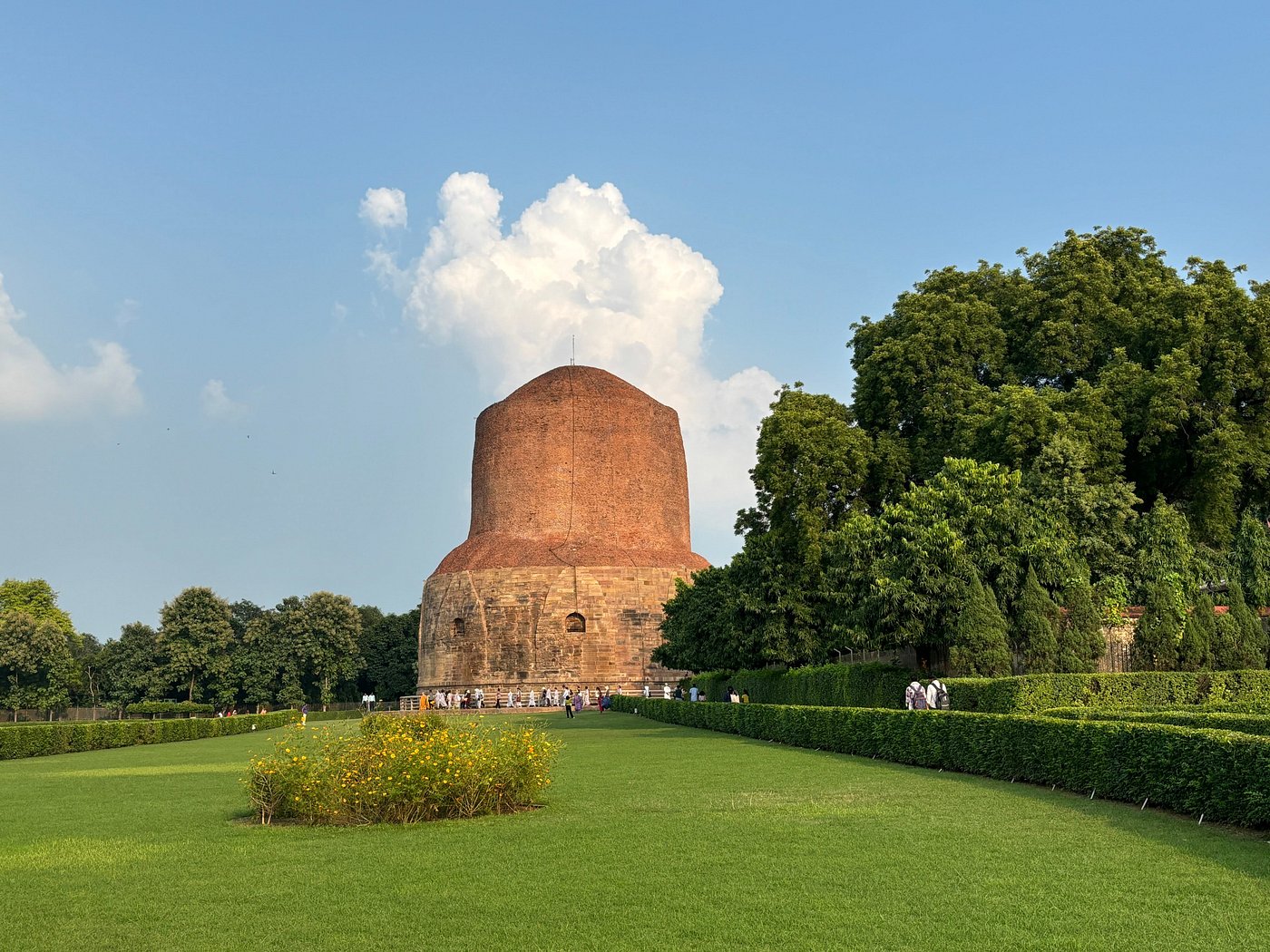
The archaeological complex is dominated by the colossal Dhamek Stupa, a cylindrical tower of stone and brick rising 43 meters high, featuring intricate 5th-century Gupta-era floral carvings and geometric stone bas-reliefs. Nearby, the Sarnath Archaeological Museum houses the iconic Lion Capital of Ashoka—sculpted from polished Chunar sandstone in 250 BCE and today honored as the national emblem of India.
- • Best Season: October to March offers crisp, clear weather with temperatures between 10°C and 25°C.
- • Aarti Timings: Evening Ganga Aarti begins around 6:30 PM in winter and 7:00 PM in summer. Arrive by private boat by 5:45 PM for prime riverfront views.
- • Silk Verification: Purchase only from certified cooperatives bearing Silk Mark and Geographical Indication (GI) tags.
- • Getting There: Lal Bahadur Shastri Airport (VNS) is 24 km away with pre-paid private chauffeured cars to the city perimeter.
Frequently Asked Questions
Essential insights to know before embarking on your Varanasi expedition.